Why Proper Charging Timing Matters for HQD Cuvie Plus 2.0?
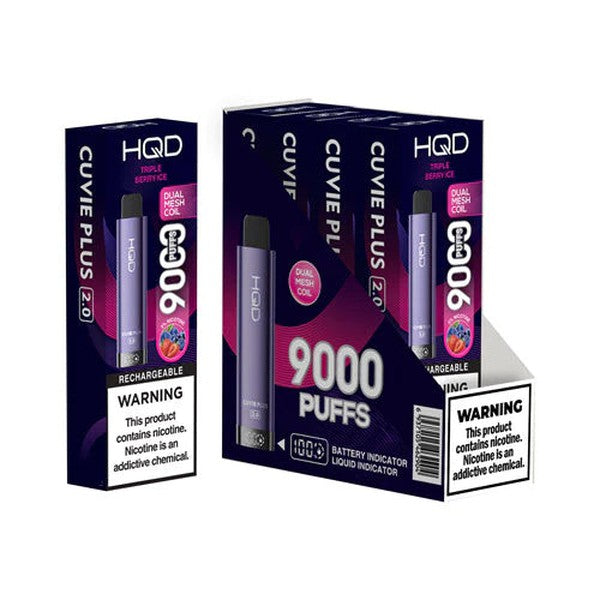
The HQD Cuvie Plus 2.0 features a sophisticated 600mAh rechargeable lithium-ion battery engineered for optimal performance across its extensive puff capacity, typically rated for up to 10,000 draws depending on usage patterns. This battery powers the device's dual mesh coil system and integrated circuitry, ensuring consistent vapor production and flavor delivery from its 14mL e-liquid reservoir. Proper charging timing directly influences the electrochemical stability within the battery cells, where lithium ion movement between anode and cathode must occur under controlled conditions to prevent dendrite formation or electrolyte degradation. Manufacturers embed protection circuits to mitigate risks, yet adherence to recommended timelines—full charges in 1 to 2 hours via USB-C—maximizes cycle life, preventing capacity fade that could otherwise manifest as diminished output or erratic LED indicators. Understanding this interplay equips users with the knowledge to sustain peak device efficacy throughout its lifecycle.
Advanced features like draw-activation and real-time battery status LEDs further underscore the importance of timing, as premature or prolonged charging disrupts calibration of these indicators, leading to inaccurate feedback on remaining power. The compact form factor, with its bottom-positioned USB-C port, demands precise handling to avoid physical stress during sessions, where timing protocols ensure uninterrupted portability and reliability for both novice and experienced vapers alike.
Effects of Overcharging on Battery Longevity
Overcharging the HQD Cuvie Plus 2.0 beyond the optimal 1-2 hour window exposes the 600mAh battery to sustained high voltage, accelerating chemical side reactions that generate heat and gas buildup within the cell structure. This phenomenon, known as lithium plating, reduces active material availability, dropping capacity by up to 20% after just a few cycles and manifesting as shorter runtime between charges. Prolonged connection to power sources, even with built-in safeguards, stresses the battery management system (BMS), potentially triggering thermal runaway risks where temperature spikes compromise safety and performance. Users often overlook subtle signs like prolonged LED blinking post-full charge, interpreting them as normal rather than indicators of strain.
Long-term overcharging patterns erode the battery's internal impedance, leading to voltage instability that affects coil heating consistency and flavor profiles—vapes may produce warmer, harsher draws as power delivery fluctuates. Economic implications arise too, as diminished lifespan necessitates earlier replacements, undermining the device's value proposition. Adhering to unplugging upon LED stabilization preserves electrochemical equilibrium, ensuring the HQD Cuvie Plus 2.0 delivers reliable puffs without the frustrations of premature power failure.
Consequences of Undercharging and Frequent Partial Cycles
Undercharging, such as disconnecting before reaching full capacity or relying on brief top-ups, induces memory effect in lithium-ion cells, where the battery "forgets" its maximum potential, resulting in inflated self-discharge rates and reduced effective puffs per cycle. For the HQD Cuvie Plus 2.0, this translates to deceptive LED readings that overestimate remaining life, catching users off-guard during critical moments and disrupting vaping routines. Frequent partial charges—common with irregular usage—further exacerbate voltage imbalances across cell layers, fostering uneven wear that shortens overall endurance from thousands to mere hundreds of cycles.
Performance degradation extends to vapor quality, as inconsistent power output causes suboptimal coil temperatures, yielding muted flavors or dry hits despite ample e-liquid reserves. Operational reliability suffers too, with risks of sudden shutdowns mid-draw due to BMS cutoffs triggered by perceived low voltage. Establishing routines of complete 1-2 hour charges calibrates the system accurately, restoring full diagnostic precision and extending usability far beyond haphazard practices.
Optimal Charging Practices and Timing Protocols
Ideal charging for the HQD Cuvie Plus 2.0 commences at 20-30% battery depletion, utilizing the included or compatible USB-C cable connected to a 5V/1A adapter for steady current flow that completes in 60-90 minutes. Positioning the device upright in a cool, dry environment (60-75°F) during this period minimizes thermal gradients, while monitoring the LED—from rapid blinking initiation to steady green completion—provides precise endpoints. Avoiding overnight charges prevents cumulative micro-overcharges, and daily consistency fosters battery health, aligning with the device's design for up to 30-50 full cycles before natural decline.
Post-charge handling involves immediate disconnection and a 5-10 minute cool-down, allowing internal stabilization before resuming use, which enhances initial draw smoothness. For users questioning third-party chargers, verifying specifications like amperage ratings ensures compatibility, and many wonder are these safe when deviating from originals, though reputable 1A options pose minimal risk with attentive monitoring. These protocols not only optimize timing but elevate the overall vaping experience through sustained reliability.
Environmental and Usage Factors Influencing Timing
Temperature extremes profoundly alter charging dynamics for the HQD Cuvie Plus 2.0; high ambient heat above 85°F slows ion diffusion, extending times beyond 2 hours and risking swelling, while cold below 50°F impedes reactions, potentially freezing electrolytes and causing permanent damage. Heavy vaping accelerates depletion, demanding more frequent but shorter charges to maintain equilibrium, whereas light use permits less urgent full cycles. Humidity introduces corrosion risks to the USB-C port, prolonging contact resistance and effective charge duration if not dried promptly.
Altitude variations subtly affect pressure-sensitive cell chemistry, though negligible for most users, emphasizing stable environments. Integrating timing with usage logs—charging post-session rather than mid-day—harmonizes battery conditioning, preventing depth-of-discharge extremes that degrade performance. These considerations transform charging from rote task to strategic maintenance, safeguarding the device's 10,000-puff promise against real-world variables.
Diagnostic Indicators and Troubleshooting Timing Issues
The HQD Cuvie Plus 2.0's LED array serves as a timing compass: rapid white blinks signal active charging, slowing to green at 100%, while persistent flashing post-disconnect flags overcharge stress or faulty cables. Intermittent lighting during sessions indicates calibration drift from poor timing history, resolvable by consecutive full cycles. Port inspections reveal debris-induced delays, where cleaning restores baseline 1-hour norms, and compatibility mismatches with high-amperage sources manifest as overheating or incomplete fills.
Advanced diagnostics involve timing successive charges to benchmark against 60-90 minutes; deviations exceeding 30% suggest cell fatigue, prompting replacement. Firmware-like BMS resets occur naturally after 24-hour rests post-proper cycles, realigning indicators. Mastering these cues empowers proactive management, averting escalation from timing lapses to full failure and prolonging satisfaction.
Conclusion
Proper charging timing stands as a cornerstone for the HQD Cuvie Plus 2.0's enduring performance, mitigating overcharge degradation, undercharge imbalances, and environmental interferences to unlock its full 600mAh potential across thousands of puffs. By embracing 1-2 hour protocols, optimal environments, and vigilant LED monitoring, users ensure flavor fidelity, runtime reliability, and safety without compromise. Ultimately, this disciplined approach elevates disposable vaping from transient convenience to sustained excellence, rewarding precision with unwavering device companionship.