Why Does the Lost Mary Quasar OS25000 Taste Different After Charging?
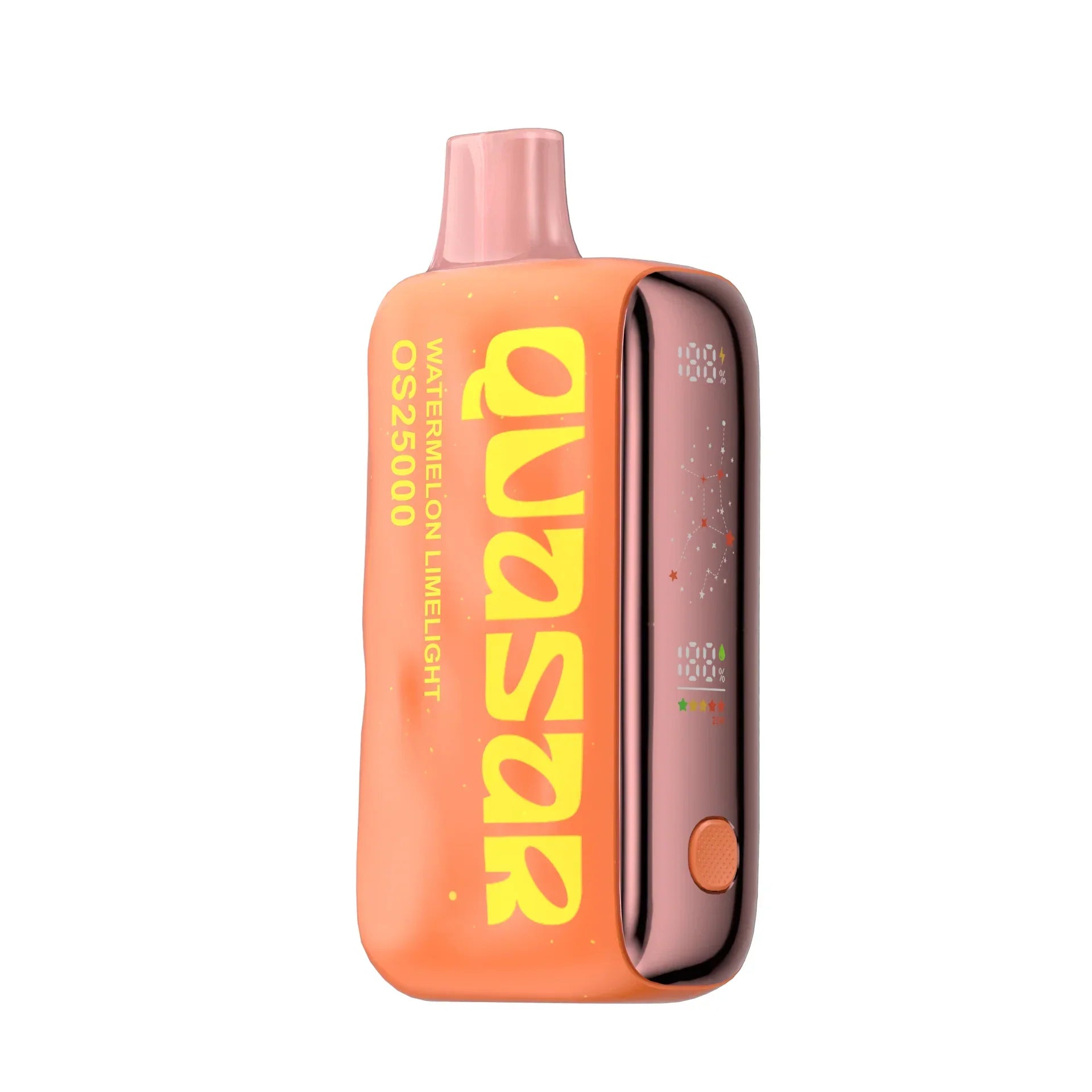
The Lost Mary Quasar OS25000, engineered with a 25,000-puff capacity, triple mesh coil array, and rechargeable battery system, consistently delivers robust flavor profiles from its 20ml e-liquid reservoir under ideal conditions. However, a prevalent user observation involves a perceptible taste alteration immediately following charging—often described as muted sweetness, heightened harshness, or unfamiliar metallic notes—that disrupts the device's signature vibrancy. This shift stems from transient physiochemical interactions between charging-induced variables and core vaping components, rather than permanent degradation. Discerning these mechanisms illuminates pathways to restoration, ensuring the Quasar OS25000 recaptures its curated sensory precision post-recharge. By examining thermal, electrical, and material dynamics, vapers can implement targeted protocols to minimize discrepancies and sustain excellence throughout the device's extended operational lifespan.
Thermal Effects from Charging on Coil and Wick Dynamics
Charging generates localized heat within the Quasar OS25000's compact chassis, subtly elevating temperatures around the battery compartment and adjacent coils, which influences e-liquid viscosity and wick saturation. Even regulated USB-C charging at standard currents produces residual warmth that thickens e-liquid temporarily, slowing capillary action and leading to uneven wetting upon initial post-charge puffs. This manifests as a drier, less flavorful hit, where top-note aromatics fail to volatilize fully due to suboptimal liquid delivery. Coils, absorbing ambient heat, exhibit altered resistance profiles briefly, ramping unevenly and scorching subtle esters before stabilizing. Allowing a 10-15 minute cooling period post-charge permits thermal equilibrium, restoring baseline wicking efficiency. To avoid dry hits, initiate subsequent puffs gently, granting extra seconds for re-saturation, as this bridges the thermal lag inherent to lithium charging cycles.
Battery Voltage Fluctuations and Power Delivery Inconsistencies
Post-charging, the Quasar OS25000's battery transitions from a depleted state to full capacity, introducing voltage stabilization phases that subtly modulate coil power. Freshly charged cells often output slightly elevated initial voltages, prompting overzealous coil heating that caramelizes residual sugars unevenly, yielding a charred or artificial aftertaste diverging from pre-charge norms. As the battery settles over the first few draws—typically 20-50 puffs—this anomaly corrects, but early sessions bear the brunt of inconsistency. Adjustable power modes exacerbate this if reset inadvertently during charging; reverting to medium settings post-recharge aligns output with e-liquid tolerances. Monitoring the LED indicator for steady green confirmation before vaping ensures voltage equilibrium, preventing the power surges that skew flavor chemistry and cloud density.
E-Liquid Migration and Concentration Changes During Charging
Charging sessions, lasting 1-2 hours, facilitate passive e-liquid redistribution within the Quasar OS25000's reservoir due to minor vibrations from current flow and gravitational settling in upright positions. This can concentrate heavier VG components or flavorants at wick interfaces, altering the PG/VG balance perceived by coils and resulting in thicker, muddled profiles—less crisp fruit notes or amplified base bitterness. Air pockets introduced via temperature expansion during charge further dilute uniformity, exposing wicks to uneven saturation gradients. Upright storage during and after charging minimizes migration, while gentle agitation pre-use homogenizes the blend. These dynamics explain the "different" taste as a temporary compositional skew rather than spoilage, with normalization occurring as consistent puffing reestablishes flow equilibrium.
Residue Activation and Coil Gunking Acceleration
Elevated temperatures from charging subtly activate dormant residues on the triple mesh coils—caramelized sucralose or glycerin polymers from prior sessions—that volatilize prematurely on first post-charge draws, overlaying authentic flavors with stale or chemical overtones. This gunk, softened by warmth, migrates onto fresh wick surfaces, impeding clean e-liquid transfer and fostering a layered taste anomaly. High-nicotine salts amplify this, as their hygroscopic nature draws ambient moisture during charge, loosening deposits. Extended charging beyond 80 percent capacity intensifies residue mobilization, underscoring partial-charge discipline. A brief low-power priming sequence—short, slow puffs—burns off transients cleanly, recalibrating coils to baseline fidelity without compromising longevity.
Airflow and Condensation Impacts Post-Recharge
Charging introduces micro-condensation within airflow channels from humidity shifts and thermal cycling, narrowing vents and altering draw resistance, which indirectly mutes flavor by reducing oxygen infusion critical for aroma blooming. Restricted airflow starves coils of optimal combustion air, yielding under-extracted, flat profiles until evaporation clears paths. External factors like ambient humidity during charge compound this, as cooler sessions foster dew-like buildup. Inspecting and gently exhaling through vents post-charge dislodges moisture, while moderate airflow settings enhance post-recharge recovery. This mechanical nuance often masquerades as flavor change, resolving swiftly with normalized draws that sweep residues and restore aerodynamic balance.
Usage Habits and Environmental Factors Amplifying Shifts
Post-charge taste divergences intensify under suboptimal habits, such as immediate chain vaping, which overloads recovering systems before stabilization. Storing the device horizontally during charge promotes uneven liquid pooling, skewing wick feeds upon upright resumption. Environmental extremes—charging in cold garages contracting seals or hot cars volatilizing stabilizers—exacerbate molecular disruptions. Consistent upright, temperate charging (68-77°F) coupled with usage pauses aligns with design parameters, minimizing perceptual drifts. Vapers noting persistent shifts benefit from flavor rotation sparingly, as adaptation fatigues palates, mimicking device fault.
Conclusion
In conclusion, the Lost Mary Quasar OS25000 tastes different after charging due to intertwined thermal gradients, voltage transients, liquid migrations, residue activations, airflow perturbations, and habitual influences that temporarily disrupt its triple mesh harmony. These shifts, far from indicative of defect, reflect adaptive physiochemistry amenable to straightforward countermeasures: cooling intervals, power recalibration, upright protocols, and gentle priming. Implementing them diligently ensures seamless flavor continuity, honoring the device's engineering for sustained 25,000-puff supremacy. Proactive mastery transforms post-charge anomalies into negligible footnotes, preserving the Quasar OS25000's reputation for unwavering excellence.