Can Temperature Affect Flavor of My Lost Mary Quasar OS25000?
Vaping flavor is an interplay of device design, heating behavior, and the thermodynamics of the e-liquid; temperature stands as one of the most influential variables in that relationship. In the Lost Mary Quasar OS25000, temperature changes—whether from device power settings, ambient conditions, or user behavior—can materially alter perceived flavor intensity, aroma balance, throat hit, and the risk of off-notes. This article examines how and why temperature matters for the Quasar OS25000, what users typically experience across different temperature ranges, and practical guidance for getting the most faithful flavor from the device.
Heating system and flavor chemistry
Flavor in e-liquids is carried by volatile compounds whose release and chemical behavior are temperature-dependent. The Quasar OS25000 uses a heating element and mesh-style implementation intended to distribute heat evenly across the wicking surface, and that design aims to extract flavor compounds consistently across a puff. At lower temperatures, certain volatile esters and delicate top notes evaporate less readily, which can mute brightness and fruity or floral characteristics. As temperature rises, more of those volatiles vaporize, often producing stronger immediate flavor, but higher heat also favors heavier, more complex molecules and can boost sweetness or accentuate tobacco and caramel notes. Excessive temperature can push compounds into decomposition pathways, generating burnt or metallic off-flavors; that risk is mitigated by good mesh construction but remains present if the coil runs too hot or the wick is under-saturated.
Device settings and internal temperature control
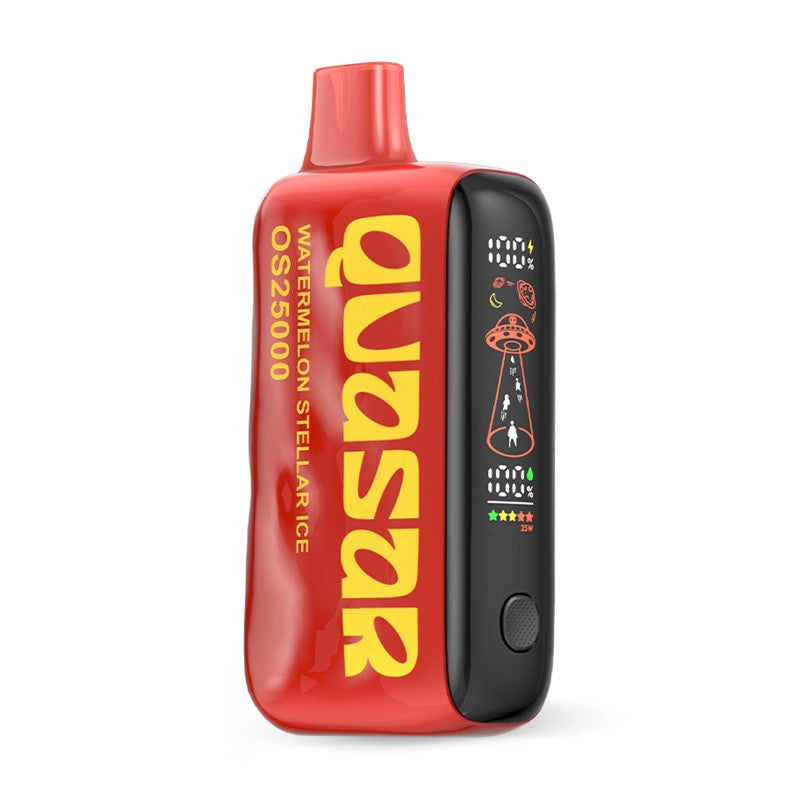
The Quasar OS25000 often provides adjustable power or preset heat profiles that directly change coil temperature and therefore flavor output. Selecting lower power settings produces cooler vapor with a smoother throat hit and preserves subtle nuances; higher settings deliver more vapor and pronounced flavor at the expense of subtlety and potential harshness. Built-in protections and thermal management influence how stable those temperatures remain over a session. When firmware or hardware controls keep coil temperature within a narrow window, the device is better at reproducing a consistent flavor across puffs. Conversely, if the device allows wide swings—due to long chains of puffs or insufficient cooldown—the flavor can shift within a single session from delicate and clean to flat or burnt.
Ambient temperature and storage effects
Ambient temperature—meaning the temperature of the surroundings—indirectly affects flavor by changing e-liquid viscosity and vapor pressure. In cooler environments the e-liquid can thicken slightly, slowing wicking and reducing the amount of liquid reaching the heating element per puff; the result is weaker flavor and a drier mouthfeel that users sometimes interpret as “muted” or lifeless taste. Warm environments lower viscosity, improving wicking and often enhancing immediate flavor and vapor production, but prolonged exposure to heat during storage can accelerate nicotine degradation and flavor fade over time. Keeping a Quasar OS25000 at moderate, stable temperatures between uses preserves intended flavor balance and reduces the likelihood of off-notes introduced by aged ingredients.
User technique and thermal dynamics
How a person vapes interacts with temperature effects in predictable ways. Short, gentle draws create cooler, more aromatic vapor that favors top notes and subtle complexity; long, forceful pulls increase the heat transferred to the coil and expand the range of molecules drawn into the vapor phase, which deepens body and sweetness but can suppress brightness. Chain vaping—taking repeated puffs with little time to cool—raises internal device temperature and frequently produces a harsher, less defined flavor that hints at dryness or scorching. Simple technique adjustments—slower inhalations, pauses between puffs, and moderate draw strength—can let a Quasar OS25000 show its most balanced flavor profile without pushing the heating element to extremes.
Common flavor changes across temperature ranges
At cooler effective temperatures, the Quasar tends to deliver cleaner, lighter flavors where citrus, mint, and delicate fruit notes remain crisp but less voluminous. Medium temperatures typically reveal the fullest intended profile: midrange sweetness, balanced acidity, and the interplay of top and base notes that define a complex e-liquid. At higher temperatures, heavier characteristics become dominant—caramelization, tobacco warmth, and intensified sweeteners—while subtle notes fall away and the throat hit firms. If the device runs too hot due to setting, environment, or chain vaping, the flavor can degrade into bitter, ashy, or burnt sensations that overshadow the intended profile.
Signs of overheating and flavor degradation
Flavor shifts that betray temperature problems are often evident before any hardware symptoms. Users may notice a dry, hollow taste, sudden loss of nuance, or an acrid bite that wasn’t present previously; these are sensory red flags of thermal stress on the wick and coil. Physical signs such as device warmth after a short session, reduced vapor despite similar draws, or erratic LED indicators (if present) often accompany the taste changes. Addressing the thermal cause—by allowing cooling time, lowering power settings, or avoiding extended chain puffs—typically restores normal flavor until the disposable’s lifespan or the coil’s condition becomes the limiting factor.
Practical recommendations to optimize flavor
Optimizing flavor on the Quasar OS25000 is primarily about controlling the heat delivered to the e-liquid and ensuring consistent wicking. Start with conservative draw length and pace to prevent rapid temperature escalation, and select the device’s lower or mid power settings when aiming for nuance and clarity. Store the device away from direct heat sources to avoid pre-heating the e-liquid or accelerating ingredient degradation. If flavor dullness or off-notes emerge during a session, allow the device to rest for a short period so internal temperatures can equilibrate; for disposables nearing the end of life, replacing the unit is often the clearest remedy. For readers asking fundamentally who should use this vape? the Quasar OS25000 fits those who value high puff counts and adjustable warmth options, but flavor-conscious vapers who prioritize delicate profiles should pay close attention to temperature management.
Interpreting flavor preferences and trade-offs
Temperature tuning is a matter of personal preference as much as physics. Some vapers prefer warmer, fuller hits and accept the loss of subtlety that comes with higher temperatures; others chase exacting recreation of nuanced recipes and will sacrifice vapor volume to preserve delicate top notes. The Quasar OS25000’s design aims to accommodate both approaches by offering control over heating intensity and an engineered mesh that resists hot spots. Recognizing the trade-offs—intensity versus fidelity, warmth versus clarity—lets users intentionally shape their experience rather than reacting to accidental flavor changes caused by poor thermal control.
Conclusion
Temperature exerts a decisive influence on the Lost Mary Quasar OS25000’s flavor, shaping which volatile compounds vaporize, how the throat hit feels, and whether the taste remains accurate or drifts toward harshness. Device settings, ambient conditions, storage, and vaping technique all contribute to the thermal environment that determines flavor expression. Managing that environment—through temperate storage, moderate draw habits, and sensible power choices—lets the Quasar deliver either crisp, delicate notes or fuller, warmer profiles on demand while minimizing the risk of combustion-like off-flavors. Thoughtful attention to temperature is therefore not an optional refinement but a central practice for anyone seeking consistent, faithful flavor from this device.