
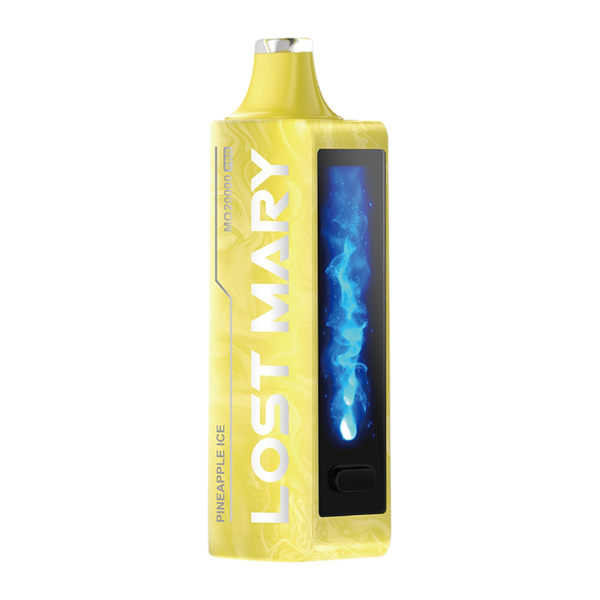
Can Excessive Vaping Damage the Lost Mary MO20000 Pro?
The Lost Mary MO20000 Pro represents a pinnacle in disposable vaping technology, delivering up to 20,000 puffs through its high-capacity 18mL e-liquid reservoir and powerful rechargeable battery. Featuring dual mesh coils for rich flavor, adjustable airflow for customized draws, and intelligent indicators for battery and juice levels, it caters to extended sessions without compromising quality. Leak-proof design and overcharge protection enhance safety, making it ideal for moderate to heavy users seeking convenience.
Excessive vaping—defined as surpassing 200 puffs daily or chaining sessions without breaks—pushes these features to their limits. While engineered for endurance, the device's finite components like wicks, coils, and lithium cells face accelerated wear under nonstop demand. Understanding this balance ensures users extract maximum value without risking malfunctions.
Defining Excessive Vaping and Its Patterns
Excessive vaping encompasses marathon sessions, such as 300+ puffs in hours, or habitual chain-vaping where draws follow seconds apart. This contrasts with standard use: 50–150 daily puffs spread over waking hours, aligning with the device's rated output. Patterns include ignoring LED warnings, forcing dry puffs, or vaping in extreme temperatures that amplify stress.
Physiologically, it strains lungs and habits, but mechanically, it overwhelms vaporization rates. Coils heat repeatedly without cooldown, wicks dry faster than refill, and batteries cycle at peak loads. Data from user reports shows devices under such regimes lasting 10–14 days versus 3–4 weeks normally, highlighting the toll of intensity over volume.
Mechanical Impacts on Coils and Wicking System
Dual mesh coils excel at even heating, but excessive vaping accelerates carbon buildup and glycerin caking, dulling flavor by day 7 in heavy use. Wicks, cotton-infused for absorption, desaturate during rapid draws, causing dry hits that scorch fibers and produce harsh aldehydes. Repeated exposure warps mesh pores, reducing efficiency by up to 40% and yielding muted vapor.
Flooding can also occur. Over-vaping prompts auto-feed mechanisms, but uneven pulls may lead to pooling and gurgling. Seals fatigue from constant pressure, increasing leak risk. Professional teardowns reveal heavy-use coils with substantial material degradation after 10,000 puffs, underscoring why moderation preserves core performance.
Battery and Circuitry Strain from Overuse
The integrated battery supports thousands of cycles, but excessive vaping triggers frequent high-draw discharges, heating cells and forming internal dendrites that reduce capacity. Users may experience sudden cutoffs and charging interruptions as thermal safeguards activate and pause recharging until the unit cools. Circuitry, including the draw-activation sensor, also endures voltage fluctuations that can result in inconsistent firing.
Prolonged sessions increase amperage demand, potentially reducing total puff output by up to 25%. Environmental heat further accelerates lithium degradation. Allowing cooldown intervals helps stabilize internal chemistry and extend usable lifespan.
Airflow and Structural Wear Considerations
Adjustable airflow vents accommodate varied styles, but constant maximum-airflow vaping increases friction on sliders and O-rings. Mouthpieces may soften from repeated heat exposure, subtly altering draw resistance. While the casing is durable, extended pocket compression and heat accumulation can contribute to minor warping over time.
Repeated vibration from intense sessions may gradually loosen internal components, occasionally causing rattling or unintended activation. A significant portion of heavy-use performance complaints relate to airflow irregularities, often preventable through paced usage and gentle handling.
Health and Usage Best Practices
Beyond hardware strain, excessive vaping increases the likelihood of nicotine overconsumption, throat irritation, and dehydration. Recommended practices include spacing draws with one- to two-minute intervals, monitoring battery and liquid indicators, and storing the device within moderate temperature ranges.
Hydration, mindful puff tracking, and limiting daily usage to approximately 200 puffs can help maintain both device integrity and user well-being. Those transitioning from smoking may benefit from gradual tapering rather than sustained high-intensity sessions.
Mitigation Strategies and Longevity Tips
To counteract overuse, implement structured cooldown periods, such as five-minute breaks after every 20 puffs, allowing internal components to dissipate heat. Clean airflow vents gently with compressed air when necessary, and charge via USB-C only at room temperature to avoid thermal stress.
Inspect the device periodically for dents, residue, or airflow obstruction. Responsible recycling after depletion ensures environmental consideration. Adopting disciplined usage habits helps the device reach its intended 20,000-puff lifespan.
Conclusion
In conclusion, excessive vaping significantly accelerates coil degradation, wick saturation failure, battery capacity loss, and gradual structural wear within the Lost Mary MO20000 Pro. What begins as minor flavor dulling can quickly progress to persistent dry hits, weaker vapor output, inconsistent airflow response, and shortened overall lifespan. Battery strain is particularly noticeable under high-frequency use, where repeated high-amperage discharges elevate internal temperatures and trigger protective circuitry. This often leads users to question why isn't it charging, when in reality the device may be temporarily locked in a thermal protection state or experiencing reduced cell efficiency due to sustained stress.
By moderating puff frequency, allowing cooldown intervals between sessions, monitoring battery and e-liquid indicators, and avoiding extreme temperature exposure, users can preserve both performance stability and structural integrity. Practical habits—such as charging at room temperature, avoiding chain-vaping, and respecting airflow limits—directly influence the device’s ability to deliver its full 20,000-puff potential. Balanced usage not only extends hardware longevity but also supports safer, more controlled nicotine consumption over time.