
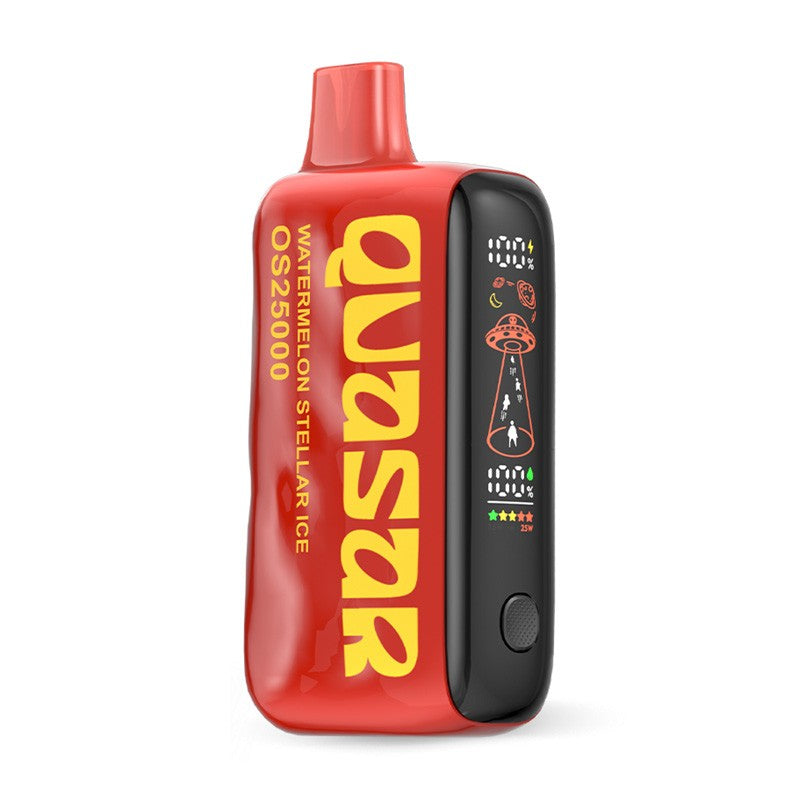
Why the Lost Mary Quasar OS25000 Feels Weak After Heavy Use?
The Lost Mary Quasar OS25000, a flagship disposable vape celebrated for its staggering 25,000-puff capacity, triple mesh coil system, and rechargeable battery, delivers exceptional flavor and vapor production under normal conditions. However, many users report a noticeable weakening in performance—thinner clouds, muted flavors, and inconsistent hits—particularly after periods of heavy use. This degradation stems from the interplay between intensive vaping habits and the device's engineered limitations, where components like coils, wicks, and power systems face cumulative stress. While designed for endurance, the Quasar OS25000 thrives on balanced operation rather than relentless demand, making it essential to dissect the underlying causes. Understanding these dynamics empowers vapers to optimize longevity, ensuring the device maintains its robust output throughout its lifecycle.
The Role of Coil Fatigue in Weakened Output
At the heart of the Quasar OS25000's vapor generation lies its innovative triple mesh coil array, which rapidly heats e-liquid to produce dense, flavorful aerosol. Heavy use accelerates coil fatigue as repeated heating cycles cause micro-deformations in the mesh structure, reducing surface area for efficient liquid interaction. Over time, this leads to incomplete vaporization, manifesting as weaker hits where the device fires but delivers lackluster clouds. Residue from sweetened e-liquids caramelizes under high temperatures, further insulating the coils and impeding conductivity. Users transitioning from lighter sessions to heavy daily consumption often notice this shift within the first 5,000 to 10,000 puffs, as the coils' initial responsiveness gives way to labored performance. Proper priming during initial use and avoiding high-sugar juices can delay onset, but inherent wear remains inevitable under prolonged strain.
Wicking Inefficiencies and Dry Hit Precursors
The cotton wicking system in the Quasar OS25000 relies on capillary action to draw e-liquid from its generous 20ml reservoir to the coils, a process optimized for steady draws. Heavy use disrupts this balance, as rapid puffing outpaces saturation rates, starving the wick and causing partial dry conditions. This inefficiency not only diminishes vapor density but also introduces subtle burnt notes, signaling the onset of deeper degradation. Airflow restrictions from condensed buildup exacerbate the issue, creating resistance that forces the device to underperform even at full power. Vapers engaging in extended sessions without pauses compound these problems, as the wick struggles to rehydrate between activations. Regular airflow maintenance, such as gentle blowing to clear minor blockages, restores some vitality, yet persistent heavy patterns erode wicking efficacy progressively.
Battery Drain and Power Delivery Challenges
Heavy use taxes the Quasar OS25000's high-capacity rechargeable battery, which powers the demanding triple mesh setup through adjustable wattage modes. Continuous draws elevate discharge rates, increasing internal resistance and generating excess heat that throttles output to prevent overload. This self-preservation manifests as weaker hits, where the battery prioritizes stability over peak performance, often accompanied by blinking indicators. Voltage sag becomes pronounced after multiple recharges, as lithium cells experience capacity fade from deep cycling—reducing effective puffs per charge by up to 30 percent over time. Users report the device feeling "weak" most acutely toward the end of a battery cycle during intensive periods, underscoring how heavy consumption accelerates this decline. Strategic recharging at 20-80 percent capacity and cooler storage environments mitigate strain, preserving consistent power delivery.
Overheating Effects and Safety Throttling
The Quasar OS25000 incorporates multilayered overheating protection, a critical feature that intervenes during heavy use by temporarily halting operation or downregulating power. Sustained sessions build thermal mass in the coils and chipset, prompting these safeguards to activate more frequently and resulting in perceptibly weaker performance. While this prevents hazardous failures, it creates a feedback loop where the device feels underpowered, with shorter draw durations and reduced cloud volume. Chain vaping risks amplify this, as back-to-back puffs overwhelm passive cooling, leading to frequent shutoffs that interrupt flow and contribute to user frustration. The device's compact form factor limits heat dissipation compared to modular systems, making moderation essential to bypass throttling and sustain robust operation.
E-Liquid Depletion and Flavor Profile Shifts
As heavy use depletes the 20ml e-liquid reservoir unevenly, flavor compounds concentrate or break down, altering the sensory experience and contributing to an overall sense of weakness. Thicker remaining juice clogs wicks more readily, while volatile top notes evaporate first, leaving harsher base profiles that mask vapor richness. This shift coincides with reduced throat hit and cloud opacity, as the coils struggle with altered viscosity under load. High-puff days hasten this progression, often halving perceived potency midway through the tank. Selecting balanced PG/VG ratios suited to the Quasar's mesh excels at maintaining equilibrium, but inevitable changes during heavy phases underscore the need for paced consumption to delay depletion impacts.
Environmental and Usage Pattern Influences
External factors interplay with heavy use to exacerbate weakness in the Quasar OS25000. High ambient temperatures accelerate battery drain and e-liquid thinning, while low humidity dries wicks prematurely. Storage in vehicles or direct sunlight during breaks compounds these effects, promoting leaks or condensation that foul internals. Usage patterns, such as vaping at maximum power settings exclusively, amplify all stressors, hastening the transition from peak to subdued performance. Vapers in demanding routines benefit from rotating devices or incorporating rest periods, allowing thermal and chemical stabilization. These habits align with the manufacturer's intermittent-use design, extending the window of strong output significantly.
Conclusion
In conclusion, the Lost Mary Quasar OS25000 feels weak after heavy use due to interconnected stresses on coils, wicking, battery, thermal systems, e-liquid, and environmental influences, transforming its marathon capabilities into a more tempered reality. While engineered for endurance, the device's responsiveness hinges on respectful handling to avert premature decline. By adopting mindful practices—pausing between puffs, optimizing storage, and balancing power modes—users can reclaim vitality and approach the full 25,000-puff promise. This balanced approach not only enhances satisfaction but honors the sophisticated engineering behind one of the market's most capable disposables.