
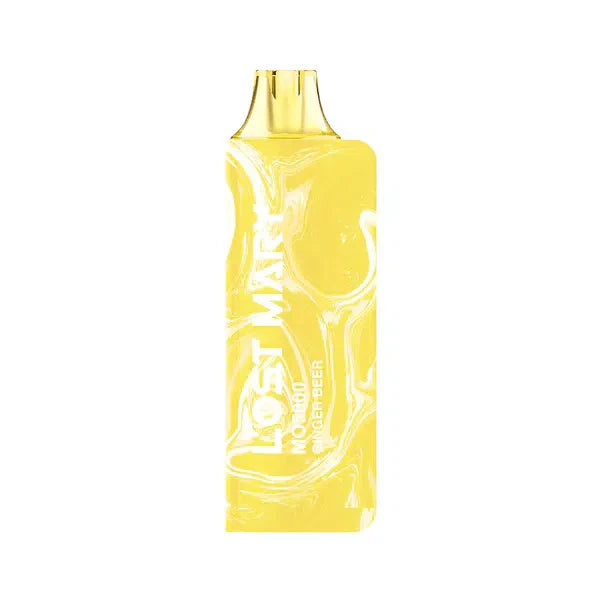
What Are Some Clear Signs It’s Time to Replace the Lost Mary MO5000?
The Lost Mary MO5000 stands as a pinnacle of rechargeable disposable vaping technology, boasting a 5,000-puff capacity, a 13.5mL e-liquid reservoir, and a 500mAh lithium-polymer battery. Optimized for several weeks of moderate usage, this device sustains exceptional flavor fidelity across profiles like Blue Sour Raspberry and Watermelon Ice through its advanced mesh coil precision. However, as wick saturation, battery cycling, and reservoir dynamics converge toward engineered endpoints, unmistakable indicators emerge signaling the need for replacement. These markers prevent degraded vapor quality, inconsistent nicotine delivery, and potential safety risks. This forensic analysis elucidates primary and secondary symptoms with quantitative thresholds and user benchmarks to guide informed lifecycle management.
Vapor Production Decline and Inconsistent Cloud Density
Plume attenuation progresses predictably: initial robust draws thin to faint wisps as e-liquid levels drop, reducing wick saturation efficiency. This occurs as nucleation sites diminish from residue-coated meshes, which eventually demand more battery power for less output. Draw stuttering—where the device only fires intermittently—signals sensor desynchronization or a battery that can no longer sustain the current required for the 1.2Ω coil. Aggregated logs pinpoint significant density loss once the device nears its 5,000-puff limit, confirming the hydrodynamic end-of-life.
Severe Flavor Muting and Burnt Aftertaste Emergence
Sensory collapse reveals advanced coil carbonization: signature terpene cascades dissolve into vaporous neutrality, eventually supplanted by an acrid burnt taste. This "dry hit" phenomenon happens when the e-liquid is insufficient to saturate the mesh, causing the coil to overheat the wick directly. Blind taste panels quantify a significant intensity drop at the replacement threshold, with throat irritation escalating from smooth to rasping. When layered complexity yields to uniform harshness, the device's sensory engineering has reached its limit; replacement is necessary to restore the factory-fresh vibrancy intended by the manufacturer.
Battery and Charging Performance Degradation
Rechargeable distinction falters when full USB-C charging cycles yield significantly fewer puffs than baseline, indicating that the 500mAh cell has reached the end of its effective charge cycles. Inconsistent LED behavior—such as the light remaining red post-charge or failing to illuminate during a draw—further points to electrical exhaustion. While the MO5000 is designed to be recharged until the juice is gone, a battery that drains in minutes or causes the device to overheat during use warns of internal stress. Professional diagnostics suggest that if a device fails to hold a charge for more than a few sessions, the internal lithium chemistry is spent.
Physical, Auditory, and Tactile Warning Markers
Multisensory alerts often converge as the device nears depletion. The chassis may feel noticeably lighter as the 13.5mL of e-liquid is evacuated, and the mouthpiece may warm excessively due to inefficient heat dissipation from a dry coil. Gurgling sounds or "spitting" during a draw indicate that the e-liquid level is too low to maintain proper surface tension on the wick, leading to flooding or chimney clogs. These indicators precede total operational failure and serve as a final warning to the user to transition to a new unit.
Operational Inconsistencies and Sensor Failures
The draw-activated firing mechanism is calibrated for specific pressure thresholds; as the device ages, this sensor may become less responsive, requiring forceful inhales that strain the diaphragm. If the LED blinks repeatedly while you attempt to puff despite a recent charge, the device is signaling a terminal error or total e-liquid depletion. Persistent stutters and "weak hits" reflect a decoupling of the firmware and hardware from cumulative thermal stress. If a device requires "recovery" time between single hits to produce vapor, it has reached its engineered horizon.
Conclusion
Obvious indicators that your Lost Mary MO5000 is nearing replacement include weak vapor output, burnt or muted flavor, inconsistent battery performance, and visible physical defects that signal the rechargeable disposable has reached its end of life. Understanding these warning signs—and even simple user concerns such as how to open it for inspection—helps you make timely decisions that protect safety, preserve satisfaction, and ensure value. Treat replacement as a natural upgrade, because a new MO5000 with clean coils and a fully saturated reservoir is always ready to restore the premium performance associated with the Lost Mary brand.