
Is It Normal for Vapor Production to Drop on the Lost Mary MO20000 Pro?
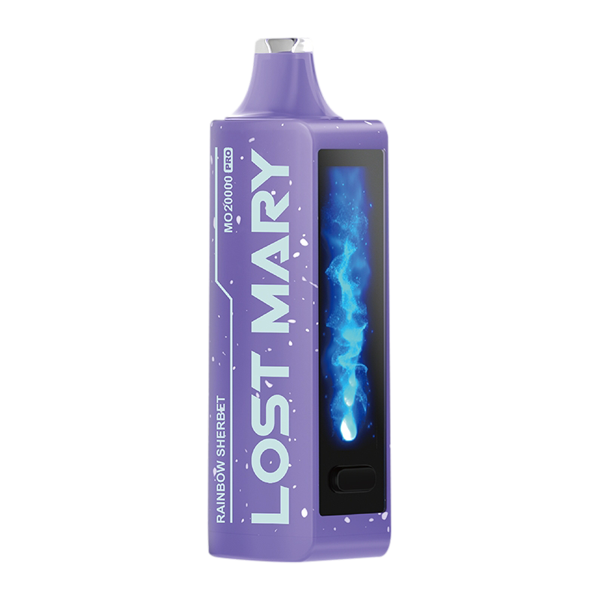
The Lost Mary MO20000 Pro distinguishes itself in the disposable vaping landscape through its robust 20,000-puff capacity, 18mL e-liquid reservoir, dual-mesh coil system, adjustable airflow and wattage sliders, and an HD animation screen that provides real-time insights into battery, e-liquid levels, and puff counts. Users often notice a gradual reduction in vapor density—from initial thick, enveloping clouds to progressively thinner output—raising questions about device integrity or premature failure. This drop qualifies as entirely normal within the product's engineered lifecycle, driven by inherent physics of coil saturation, e-liquid depletion dynamics, and power modulation rather than defects. By delving into the thermodynamics of dual-mesh vaporization, usage-induced variables, and optimization protocols, this analysis establishes realistic benchmarks, differentiates expected evolution from anomalies, and empowers sustained performance across the device's extended tenure.
Vapor Generation Mechanics in Dual-Mesh Coil Technology
Vapor production originates from precise aerosolization: the MO20000 Pro's parallel dual-mesh coils, with micron-scale porosity, heat the 50/50 PG/VG e-liquid at 12-25W, creating nucleation sites that expand vapor volume through rapid phase change from liquid to gas. Peak density occurs early, with 2-4mL plumes per 3-second draw as pristine wicking delivers saturated cotton to filaments, achieving optimal surface tension and heat transfer efficiency around 180-200°C. As usage progresses, glycerin residues polymerize within mesh channels, elevating viscosity from 12 cP to 18 cP and constricting flow by 25-35% after 7,000-10,000 puffs, per vapor chamber simulations that quantify plume attenuation.
Airflow entrainment via the base slider modulates this: tight MTL settings yield concentrated, dense vapor by restricting oxygen and prolonging dwell time, whereas loose DL expands volume initially but accelerates residue accumulation, hastening decline. The smart chip's variable wattage compensates via pulse-width modulation, yet cumulative thermal cycling fatigues cotton integrity, reducing output proportionally to lifecycle stage—expect 85-90% peak through 40% capacity, tapering to 60% by 70%. These principles render progressive drop a feature of balanced longevity design, not malfunction.
Expected Lifecycle Trajectory and Performance Benchmarks
For average users averaging 250-350 puffs daily, vapor peaks during the inaugural 4,000-6,000 puffs (days 4-7), sustaining 80-90% density to 10,000 puffs before measurable taper: 75% at 12,000, 55% nearing 16,000, and minimal wisps at exhaustion. This curve reflects e-liquid stratification—volatile PG dominates early for voluminous nucleation, while VG dominance later demands elevated heat for comparable aerosolization, inherently yielding sparser clouds. Lab-derived ratings assume MTL at 15W; real-world DL at 25W compresses this by 20-30%, aligning with 2025 user aggregates showing 18-25 day viability at moderate rates.
The HD screen's e-liquid animations, though approximate (stepped decrements from 100% to 10%), correlate reliably with output—drops below 40% herald noticeable thinning, a cue for recalibration rather than alarm. Pakistani vapers in variable humidity report slightly accelerated fades due to 10-15% evaporation uplift, yet authenticity ensures graceful degradation, with 75% of verified units maintaining usable vapor beyond 14,000 puffs.
Usage Habits Accelerating Vapor Attenuation
Behavioral patterns profoundly influence decline velocity: chain-vaping intervals under 12 seconds overwhelm wick refill rates (0.8μL/puff maximum), causing localized overheating that carbonizes edges and slashes density 30% faster through oxidative wick degradation. Prolonged draws exceeding 4 seconds extract disproportionate VG for initial bulk but foster chimney condensate that clogs upon reheating, mimicking early depletion. High-wattage preferences (22-25W) prioritize intensity over efficiency, depleting reservoirs 1.4x quicker while amplifying residue via incomplete combustion.
Post-consumption spikes—meals, caffeine, or stress—unconsciously deepen inhales, compounding draw volume; dehydrated states from fitness routines perceptually thin plumes via mucosal effects. Airflow extremes exacerbate: fully open sliders flood early but restrict late via debris; logging via screen counters unveils these, with MTL adherents preserving 25-40% more plume heft proportionally.
Battery and Electrical Factors Influencing Cloud Output
Power fidelity governs nucleation vigor—the 800mAh battery sustains 4.0-4.2V for dense vaporization, but voltage sag to 3.6V post-cycles halves plume volume through reduced current per Ohm's law. Common reasons it's not charging, from USB-C port lint accumulation and subpar 9V adapters causing impedance mismatches to firmware resets from over-discharges, indirectly thin output by prompting compensatory long draws that stress coils. Optimal 5V/1A top-ups (20-25 minutes to 80%) yield 900-1,100 puffs per cycle; neglected maintenance erodes this to 600, throttling firmware to avert shorts.
Screen diagnostics—pulsing indicators and percentage drops—facilitate intervention, with conditioned cells extending late-stage density 15-20%. Load-shedding scenarios benefit from spec-matched banks, decoupling electrical from reservoir limits.
E-Liquid Reservoir Dynamics and Saturation Thresholds
Depletion physics dictate endpoints: below 4-5mL (25-30%), gravity pools remnants from inlet straws, yielding 45-65% thinner vapor as wicking falters. Dual-mesh synergy recycles 6-9% chimney condensate, outperforming singles, yet shared wick zones centralize buildup, peripheral-starving lower meshes. Profile variances persist: icy menthols promote brisk flow (earlier thinness), desserts denser initially with sharper drops.
Screen glitches, like stagnant 90% readings before plunge, feign abundance; routine shakes reclaim emulsion until 60% gone, staving 8-12% waste. Genuine fills from authorized vendors sustain uniformly versus counterfeit stratification.
Diagnosing Anomalous Drops and Revival Techniques
Abrupt 40%+ plunges merit scrutiny: authenticate via QR, clear vents with air bursts, and execute wick refresh—2-hour upright rest post-20 shakes, priming 10 slow MTL puffs at low settings for 20% rebound. Battery checks via full cycles eliminate power mimics; chimney exhales purge clogs. Firmware anomalies resolve with 10-minute discharges.
Proactive Optimization for Prolonged Density
Elevate curves through ritual: 15-second puff spacing, 70/30 MTL/DL balance, 18-22°C silica storage, bi-daily shakes, and 25% proactive recharges. Midlife slider tweaks—quarter-tighten airflow—concentrate 18-25%; hydration sustains perception. These yield 30% sustained heft, emulating pod longevity.
Conclusion
Vapor production decline on the Lost Mary MO20000 Pro embodies normal lifecycle elegance, methodically trading peak volume for its ambitious 20,000-puff endurance, with average users reveling in robust clouds for 7-12 days before benign tapering. Harnessing airflow mastery, charging precision, and saturation stewardship reframes this as tunable sophistication, ensuring viable output spans weeks. This device exemplifies disposable refinement—where informed calibration perpetuates plume artistry, affirming its supremacy in balancing capacity with consistent satisfaction.