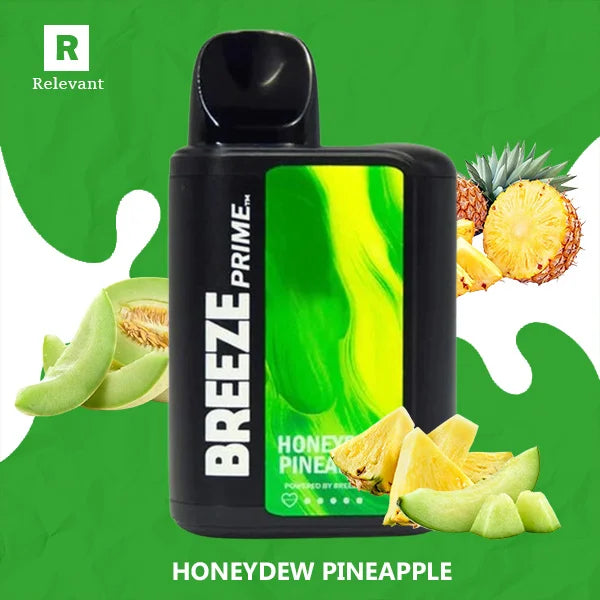
Does Chain Vaping Damage the Breeze Prime?
Chain vaping—repeated, rapid consecutive draws without pauses—places sustained thermal and mechanical demand on devices like the Breeze Prime. Evaluating whether this behavior causes lasting damage requires examining how the device’s heating system, wick dynamics, battery, and airflow respond to continuous use. The following sections unpack the mechanisms at play, distinguish short-term effects from cumulative harm, and offer practical guidance to preserve performance and safety.
How sustained use stresses the heating assembly
The Breeze Prime’s heating element and wick are designed to vaporize liquid within a predictable thermal window. Chain vaping increases the rate of vaporization beyond what the wick can replenish and raises the heating element’s average temperature. As the coil runs hotter, localized overheating can cause accelerated degradation of wick fibers and protective coatings on the heating element. Over time this raises resistance, reduces effective surface area for vaporization, and alters heat distribution. Repeated high-temperature episodes therefore shorten the useful life of the heater assembly by promoting charring, residue buildup, and mechanical breakdown of the wick structure.
Wicking dynamics and the risk of dry hits
Under steady-state use, capillary action moves e-liquid into the wick at a rate matched to typical puff profiles. Chain vaping upsets that balance: the wick cannot refill fast enough, leaving portions of the heating surface momentarily under-saturated. This produces dry hits—acrid, overheated vapor—and accelerates thermal stress on the coil and surrounding materials. Users who frequently chain-vape often report more rapid deterioration of flavor and coil life compared with moderate, spaced usage. Because wick saturation is central to both flavor and component longevity, repeated dry episodes are a direct pathway by which chain vaping reduces the Breeze Prime’s effective lifespan.
Battery and power delivery consequences
Rapid consecutive draws demand higher instantaneous currents and sustained discharge rates, which stress the device’s battery and power-management circuits. While the Breeze Prime’s battery management will limit unsafe behavior, repeatedly operating near peak discharge increases internal resistance over time and can reduce the battery’s capacity. Those changes manifest as shorter runtime, longer charge times, and sometimes reduced peak output, which in turn prompts harder draws and a vicious cycle of stress. Excessive thermal loading during chain sessions also increases heat transfer into the battery area, accelerating chemical aging and contributing to long-term capacity loss.
Airflow, condensation, and residue buildup
Chain vaping alters airflow and condensation patterns within the pod. Repeated rapid draws increase aerosol condensation in airway crevices and on the coil, which can drive more residue onto the wick and heating surface. That residue reduces wicking efficiency and changes thermal behavior, making subsequent chain sessions more likely to produce dry hits and faster wear. In addition, the higher particulate load created by continuous sessions increases the rate at which the pod’s internal surfaces foul, so users who chain-vape generally need to replace pods more often to maintain consistent performance.
Thermal cycling and mechanical stress
Alternate heating and partial cooling create thermal cycling that causes micro-expansion and contraction of materials. Chain vaping reduces the time available for cooling between consecutive puffs, which means components spend longer periods at elevated temperature. This sustained thermal state, repeated across many sessions, exacerbates stresses on plastic mounts, adhesive bonds, and seals. Over weeks or months, those stresses can lead to loosened internal fittings, increased rattling, and eventual seal failure that permits leaks or ingress of contaminants. In short, the mechanical integrity of a compact device like the Breeze Prime is compromised more quickly under habitual chain use.
Short-term tradeoffs versus long-term damage
Mitigating harm while allowing heavier use
If occasional chain vaping is part of your pattern, several steps reduce cumulative damage. Use liquids with appropriate viscosity for the device so wicking is optimal, and avoid high-PG/VG extremes that exacerbate dryness or flooding. Allow short pauses between extended draws to give the wick a chance to re-saturate and the coil to cool slightly. When the device supports adjustable airflow, increasing airflow during longer sessions lowers coil temperature by introducing more cooling air and distributes vaporization more evenly. Finally, practice routine maintenance: replace pods at the first sign of persistent dryness, sputtering, or decreased flavor rather than driving them to failure.
When chain vaping indicates user behavior patterns to change
Frequent chain vaping is often a symptom of usage habits that the device was not intended to sustain. If you find yourself regularly taking back-to-back draws, consider hardware designed for higher-output or longer-session use, with stronger wicking and larger batteries. Addressing the root behavioral pattern—whether nicotine preference, session timing, or social contexts—reduces the pressure on the device and aligns equipment with expectations. Recognize that replacing the Breeze Prime more frequently is a practical outcome of heavy use and not necessarily evidence of defect.
Safety considerations and warning signs
Certain warning signs demand immediate attention: persistent overheating, swelling of the device, burning smells, or visible coil charring after use. These indicate that chain vaping has pushed components beyond safe tolerance or that battery stress has become significant. If such signs appear, stop using the device and follow manufacturer guidance for disposal or warranty support. Treat sustained high-temperature operation as a safety concern, not merely a performance issue.
Conclusion
Chain vaping accelerates the mechanical, thermal, and chemical stresses that the Breeze Prime’s compact design and consumables already manage in normal use. While occasional rapid sessions produce mostly transient symptoms like dry hits and reduced flavor, habitual chain vaping shortens coil life, degrades wicking performance, and accelerates battery aging. By moderating draw patterns, choosing compatible liquids, allowing brief cooldowns, and maintaining pods proactively, users can reduce but not eliminate the added wear. For those who routinely require extended continuous use, selecting hardware engineered for higher throughput is the most effective route to avoid the accelerated maintenance and potential safety concerns that chain vaping imposes. Would you like a tailored maintenance plan that accounts for heavier usage patterns and recommends replacement intervals?